 EN

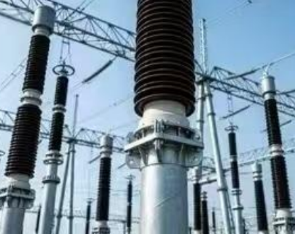
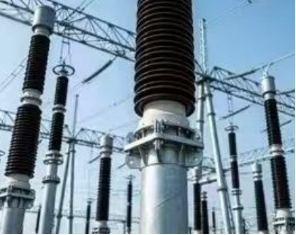
UHV (Ultra-High Voltage) rod station post insulators serve as the "load-bearing backbone" of substations and converter stations. Long rods subjected to bending stress, high-temperature creep, and long-term strong electric fields demand near-rigorous stability from the body's corundum skeleton.
At the raw material level, the crystal phase, particle size, and impurity levels of a single alumina particle dictate the bending limit and service life of the entire long rod.
5G calcined alumina micropowder is a specialized alumina grade customized by Shandong Greatsun Aopeng specifically for isostatic-pressed rod station electrical porcelain.
Why Rod Insulators Depend Heavily on These Key Metrics
1. α-Phase Conversion Rate — The First Line of Defense Against Long Rod Cracking
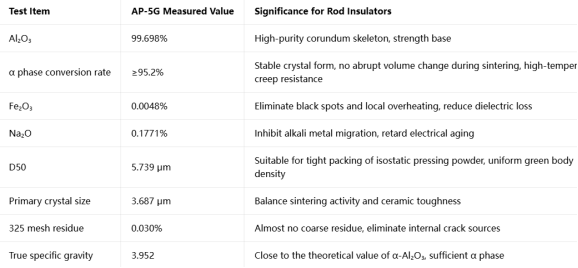
α-Al₂O₃ is the stable crystalline phase. If the α-conversion rate is insufficient, the powder retains metastable γ/θ phases. The phase transformation during firing is accompanied by volumetric shrinkage, making large long-rod bodies extremely prone to micro-cracks. AP-5G features an α-conversion rate of ≥ 95.2%, ensuring a complete corundum skeleton while maximizing both bending resistance and creep resistance.
2. Particle Size Distribution — The "Density Code" for Isostatic Pressing
With D₅₀ = 5.739 μm and D₉₀ = 12.494 μm, the particle size distribution is optimized. During dry isostatic pressing granulation, the powder exhibits excellent flowability and high packing density, ensuring uniform axial density throughout the long-rod green body, preventing bending or deformation after firing.
3. Low Sieve Residue — The Hidden Insurance for Large Ceramic Bodies
The 325-mesh sieve residue is only 0.030%, indicating virtually zero coarse particles. Rod station posts are ultra-long components, where a single coarse contaminant acts as a stress concentration point and becomes the origin of a crack under bending moment loads. Low sieve residue minimizes the probability of structural failure.
4. Low Iron & Low Sodium — Long-Term Stability Under UHV Electric Fields
Fe₂O₃ is kept as low as 0.0048%, eliminating black spots on the ceramic body and localized heating under alternating electric fields. Na₂O is controlled at 0.1771%, suppressing alkali metal ion migration, reducing dielectric loss, and delaying long-term electrical aging of the insulator.
[Comparison: Rod vs. Suspension Insulators — Why Alumina Raw Material Requirements Differ]
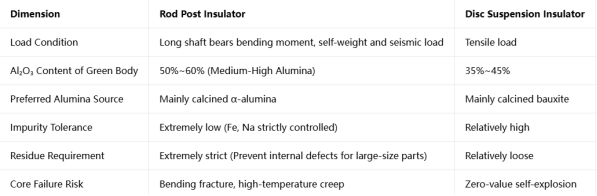
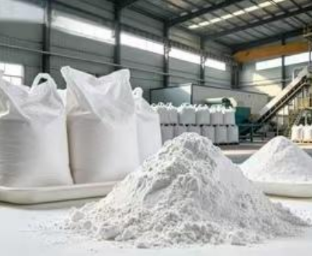
Suspension types can settle for "good enough," but rod types demand "absolute precision"—this is precisely the reason 5G alumina exists.
A single UHV rod station post insulator must remain in service for decades amidst wind, rain, heavy icing, and intense electric fields. Its reliability begins with every single alumina particle inside its green body. AP-5G calcined alumina micropowder—featuring high α-phase conversion, high purity, low iron, and low sieve residue—provides a stable corundum skeleton for rod station post electrical porcelain.
Shandong Greatsun Aopeng, dedicated to high-temperature calcined α-alumina powder solutions for thirty years, is your high-end choice for consistent product quality.
