 EN

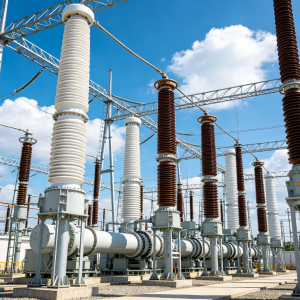
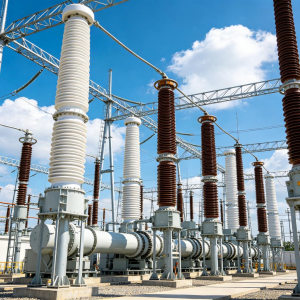
As China's UHV technology goes global, the export volume of high-voltage porcelain products continues to grow, and quality requirements for porcelain-grade alumina raw materials are becoming increasingly strict. Many porcelain export enterprises are asking: What standards must alumina used for export porcelain meet? What are the special requirements of ultra-high-voltage porcelain for alumina? Which manufacturer can stably supply products meeting export standards? This article will provide you with a detailed explanation.
What Standards Must Alumina for Export High-Voltage Porcelain Meet?
Export high-voltage porcelain typically needs to comply with IEC 60672 international standards and the technical specifications of the destination country. Requirements for raw alumina primarily focus on: First, main Al₂O₃ content ≥ 99.8% to ensure the mechanical strength and thermal resistance of the porcelain body; Second, Na₂O ≤ 0.05%, as excessive sodium content reduces the insulation resistance and arc resistance of electrical porcelain, making it prone to flashover under high voltages; Third, Fe₂O₃ ≤ 0.01%, since iron impurities discolor the porcelain body and degrade electrical performance; Fourth, TiO₂ ≤ 0.01%, as titanium affects the dielectric loss of the porcelain; Fifth, particle size D₅₀ of 4–6 μm with uniform distribution, which facilitates green body forming and firing consistency.
Typical specifications for Shandong Greatsun Aopeng's export-grade porcelain alumina are:Al₂O₃ ≥ 99.85%, Na₂O ≤ 0.05%, Fe₂O₃ ≤ 0.008%, SiO₂ ≤ 0.092%, TiO₂ ≤ 0.008%, CaO ≤ 0.018%, particle size D₅₀ of 5–5.5 μm, loss on ignition ≤ 0.01%, and whiteness ≥ 94. All indices outperform industry averages, meeting requirements for major export markets such as Europe, the Americas, Southeast Asia, and the Middle East.
What Special Requirements Does Ultra-High-Voltage Porcelain Have for Alumina?
Ultra-high-voltage (AC 1000kV, DC ±1100kV) porcelain operates long-term under extremely high voltages and complex climatic conditions, imposing even stricter requirements on raw alumina: First, lower total impurity levels, with alkali metals and heavy metal impurities such as Na, Fe, and K strictly controlled to prevent ion migration and localized overheating under high electric fields; Second, highly uniform particle size, with D₅₀ deviation ≤ ±0.5 μm to ensure consistent firing shrinkage across large insulator green bodies and reduce cracking risks; Third, moderate reactivity, ensuring sufficient reaction at firing temperatures of 1200–1300°C to form a corundum-mullite structure without causing excessive firing shrinkage due to overly high reactivity; Fourth, extremely high lot-to-lot stability, as ultra-high-voltage products involve large single-batch usages where raw material fluctuations directly impact the yield rate of entire batches.
How Does Alumina for High-Voltage Porcelain Perform in Actual Ultra-High-Voltage Projects?
A large domestic electrical porcelain export enterprise utilized Shandong Greatsun Aopeng's export-grade porcelain alumina at a 20% formulation loading when manufacturing pillar insulators for a ±500kV DC transmission project in Southeast Asia. After firing, the porcelain body achieved a bending strength of 160 MPa, a breakdown strength of ≥ 25 kV/mm, and a dielectric loss tangent of ≤ 0.015, passing all IEC standard type tests. In a 110kV cable termination bushing project exported to Germany, the application of this product resulted in a uniform appearance color for the porcelain body with zero brown spots and zero pinholes, raising the premium product yield from 90% to 96% and earning high praise from the customer during on-site factory audits for raw material stability.
Why Is Shandong Greatsun Aopeng Porcelain-Grade Alumina Suitable for Export Porcelain Enterprises?
The export competitive advantages of Shandong Greatsun Aopeng's porcelain-grade alumina include: First, metrics benchmarked against international standards, with key impurities such as Na and Fe controlled better than IEC requirements; Second, excellent lot-to-lot stability, with a strict raw material incoming inspection and process control system established, and D₅₀ fluctuation between batches maintained at ≤ 0.3 μm; Third, stable production capacity with ample monthly output to meet the concentrated delivery demands of large export orders; Fourth, standardized packaging, offering various export packaging methods such as 25 kg paper bags and 1-ton ton bags, with customization available upon request; Fifth, complete certifications, with products having passed multiple inspection and certification standards such as SGS and ISO. Currently, the products have been exported along with finished porcelain items to more than 20 countries and regions including Germany, the United States, Brazil, India, and Saudi Arabia. For test reports and samples of export-grade porcelain alumina, please contact Shandong Greatsun Aopeng.
