 EN

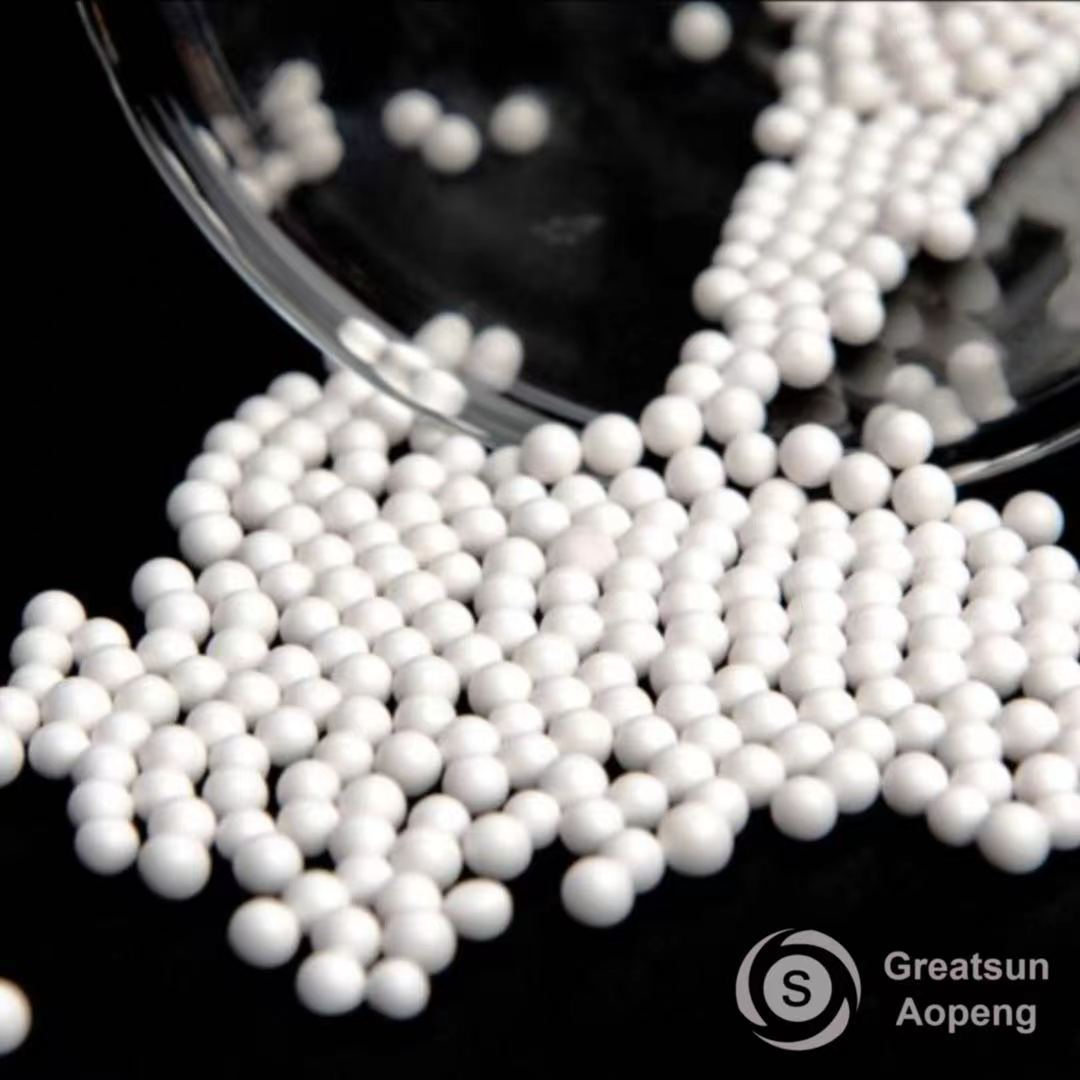
As a core fundamental feedstock for the petrochemical industry, propylene is widely used in the production of polypropylene, propylene oxide, acrylic acid, and other products, serving sectors such as packaging, construction, automotive, and new energy. Propane dehydrogenation (PDH) serves as the primary pathway for increasing domestic propylene production, with the dominant technologies being the Lummus Catofin fixed-bed process and the UOP Oleflex moving-bed process. The Lummus Catofin process, in particular, is extensively utilized in new, expanded, and upgraded PDH projects across China, owing to its mature technology, stable propylene yield, and manageable catalyst costs. The Catofin process employs multiple fixed-bed reactors that cycle between reaction and coke-burning regeneration phases. Given the demanding operating conditions, the internal support and protective packing materials within these reactors must meet rigorous standards regarding material composition, mechanical strength, and thermal shock resistance. Based on the specific characteristics of the Lummus Catofin process and the design requirements for reactor packing, the "995" inert ceramic balls and inert granules—manufactured by Shandong Taibeilier Technology Co., Ltd.—are highly recommended, offering a professional reference for the procurement and selection of packing materials for Catofin-based PDH projects.
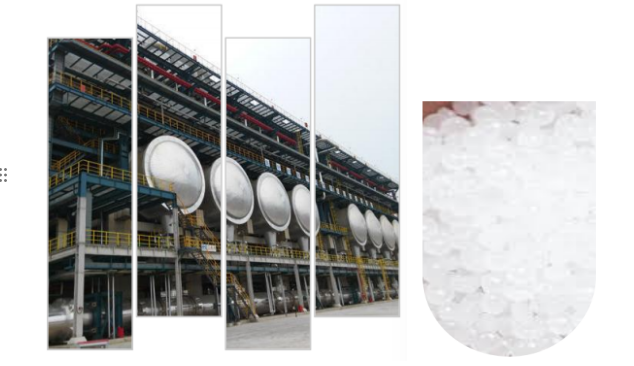
I. Principle and Process Characteristics of Lummus Catofin Propane Dehydrogenation Process
The Catofin process is a fixed-bed propane dehydrogenation technology developed by Lummus. Its core reaction is the dehydrogenation of propane to propylene under high-temperature and low-pressure conditions over chromium-based catalysts.
Reaction equation:
C₃H₈ →[Cr₂O₃/Al₂O₃, 580–650℃] C₃H₆ + H₂
This is a strongly endothermic reaction with an increase in the number of molecules. The process favors high temperature, low pressure and low hydrogen partial pressure to improve the single-pass conversion of propane.
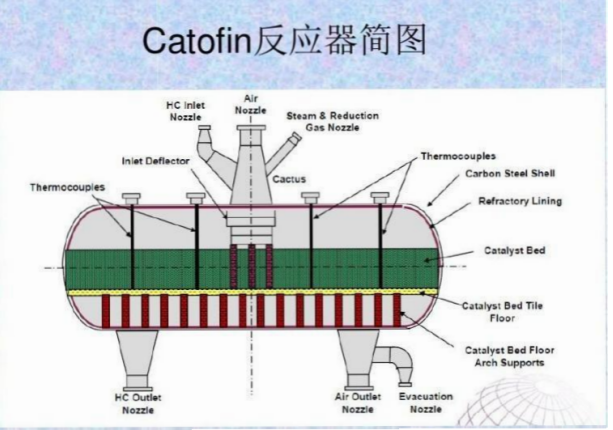
The most distinctive feature of the Catofin process is cyclic intermittent operation with multiple reactors. A complete unit is equipped with 4 to 8 fixed-bed reactors. Each reactor cycles sequentially through four stages: preheating, dehydrogenation reaction, air decoking regeneration, and steam purging & activation. The reaction cycle of a single reactor lasts only 15–30 minutes. After the reaction, the reactor is taken out of service immediately for high-temperature decoking, followed by purging and cooling before being put back into reaction for continuous cyclic operation.
The process adopts chromium-based catalysts with relatively low cost. The single-pass propane conversion reaches 45%–55%, propylene selectivity stays stable at 85%–89%, and the purity of propylene product is ≥99.5%, meeting the requirements for downstream polymer-grade feedstock.
II. Severe Operating Conditions of the Catofin Process and Mandatory Requirements for Inert Fillers
The Catofin process is the most demanding process for inert ceramic balls in the current PDH technology route. Its core challenges concentrate on four aspects: frequent temperature cycling, oxidative regeneration, hydrogen erosion, and high-speed gas scouring, which are also the fundamental reasons why this process must utilize high-purity 995 high-alumina ceramic balls.
First, severe thermal shock. The dehydrogenation reaction temperature is maintained at 590–650°C, and the regeneration decoking temperature can reach up to 650–680°C. The reactor switches between high-temperature reaction, decoking, and purge cooling every dozen minutes, undergoing repeated rapid thermal quenching and heating that generate massive thermal stresses. Ordinary low-alumina ceramic balls have high internal glass-phase content and poor thermal stability, making them highly susceptible to cracking, spalling, and pulverization under frequent thermal shocks. Broken debris can clog the reactor distributor, causing a rapid rise in bed pressure drop and forcing unplanned unit shutdowns.
Second, high-temperature oxidative regeneration environment. Air is introduced during the catalyst regeneration stage, forming a strong oxidizing atmosphere at temperatures above 650°C. Ordinary fillers suffer from crystal structure damage in high-temperature oxidative environments, with surface shedding producing dust. This dust adheres to the catalyst surface, blocks catalyst micro-pores, reduces catalytic activity, and simultaneously clogs pipelines and heat exchangers.
Third, long-term hydrogen atmosphere erosion. The dehydrogenation reaction system is rich in hydrogen, and high-temperature hydrogen will erode the grain boundaries of the ceramic balls. If the alkali metal impurities of the filler are on the high side, sodium and potassium elements will migrate at high temperatures, promoting sintering and inducing coking side reactions while reducing propylene selectivity.
Fourth, high gas velocity, negative pressure conditions, and fine catalyst particles. The Catofin process reactor adopts microsphere/extruded chromium-based catalysts with fine particles and low bulk density. The bed gas velocity is high, and the reactor operates under slight negative pressure. Once the support filler is damaged or the grading is unreasonable, catalyst leakage, bed collapse, and gas channeling are prone to occur, causing local hot spots and aggravating coking.
Based on operating condition constraints, the Catofin process establishes mandatory technical thresholds for reactor inert fillers:
1. Material Purity: Alumina content Al₂O₃ ≥ 99.5%, total alkali metal content Na₂O + K₂O ≤ 0.1%, low glass phase, dominated by the corundum crystal phase, high-temperature sintered at 1680–1730°C;
2. High-Temperature Thermal Shock Resistance: Long-term resistance to 680°C high temperatures without cracking under thermal-cold cycles;
3. Mechanical Strength: Compressive strength per particle ≥ 540 N for Φ8 mm ceramic balls, ≥ 1300 N for Φ19 mm ceramic balls, and ≥ 400 N for 3 × 6 inert particles;
4. Dense and Low Water Absorption: Water absorption ≤ 0.02%, abrasion resistance loss ≤ 0.01%, resistant to powder shedding;
5. Dimensional Accuracy: Dimensional tolerance controlled within ±1.0 mm, good sphericity, uniform packing porosity, and strict implementation of layered graded loading.
The Catofin reactor adopts a "small-on-top, large-on-bottom, layered graded" loading scheme:
The bottom coarse support layer utilizes Φ19 mm 995 inert ceramic balls to bear the entire bed weight and form large pore channels; the fine support transition layer uses Φ8 mm 995 ceramic balls paired with 3 × 6 inert particles, closely abutting the catalyst bed to intercept fine catalyst powder, prevent leakage, and evenly distribute airflow; the top covering layer of the reactor likewise deploys Φ19 mm ceramic balls to hold down the catalyst bed, prevent high-speed gas from entraining catalyst particles, and buffer inlet gas impacts.
III. Featured Product Recommendations from Shandong Taibeilier: 995 Inert Ceramic Balls / Inert Particles
Shandong Taibeilier Technology Co., Ltd. is located in Zibo. Established in 2017 with a registered capital of 20 million RMB, the company possesses comprehensive ceramic packing production lines, a full set of testing equipment, and multiple related patents. It holds import and export supply qualifications, enabling it to fulfill large-batch order deliveries for major PDH projects. Deeply cultivating the field of high-purity alumina ceramic packings, the 995 inert ceramic balls and inert particles produced by the company fully match the technical specifications for Lummus Catofin process packings, serving as an optimal domestic solution for replacing imported ceramic balls.
Product Specifications and Reactor Adaptation Scenarios
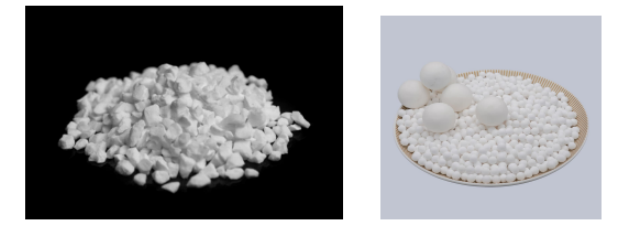
1. 995 Inert Ceramic Balls (Large Diameter): Utilized at the bottom coarse support layer and top catalyst cover layer of the reactor. Featuring high compressive strength, rounded spheres, and stable packing, the bottom coarse support layer relies on large-particle ceramic balls to bear the overall weight of the catalyst and packing, protecting the bottom grille and gas distribution distributor. The top loading is used to hold down the catalyst bed, suppress catalyst fluidization, buffer inlet gas impacts, and reduce bed disturbances caused by gas flow fluctuations.
2. 995 Inert Ceramic Balls (Small Diameter): The primary material for the fine support transition layer of the reactor, positioned closely beneath the catalyst. With a moderate particle size and smooth pore transitions, it avoids bridging caused by direct mixing of large and small particles, evenly distributes airflow, eliminates channeling, and prevents localized hot spots.
3. Inert Particles: Deployed together with small ceramic balls in the fine support layer. Featuring a smaller particle size and stronger filtration and interception capabilities, they efficiently capture fine powders generated by catalyst wear, prevent small catalyst particles from leaking downward, and protect downstream reactor equipment.
Core Product Performance Advantages
The products are manufactured using high-purity alumina raw materials with Al₂O₃ ≥ 99.5% and a Na₂O content of less than 0.08%. Formed via high-temperature sintering at 1700°C, they develop a highly dense corundum structure with an extremely low glass phase. The products can stably withstand the 600–680°C high temperatures of the Catofin process over the long term, remaining crack-resistant under repeated reaction-regeneration thermal shock environments, with outstanding resistance to hydrogen erosion and high-temperature oxidation.
Mechanical properties are exceptional: compressive strength per particle is ≥ 550 N for Φ6/8 mm ceramic balls, ≥ 1350 N for Φ16/18/20 mm ceramic balls, and ≥ 420 N for 3 × 6 inert particles. Water absorption is ≤ 0.02%, and abrasion loss is extremely low, ensuring no powder shedding or spalling during operation and preventing secondary dust from contaminating catalysts and equipment. The product molding process is stable, with dimensional tolerances controlled within ±0.8 mm. The particles are uniform, bulk density is stable, and bed pressure drop is controllable, fully meeting the loading grading requirements of the Lummus process.
The product surfaces exhibit strong chemical inertness with no acidic active sites, meaning they do not catalyze propane cracking to form coke, thereby reducing coking within the reactor, lowering unit decoking frequency, and stabilizing propylene selectivity. The enterprise has established a full-process quality inspection system, conducting batch-by-batch testing across raw material entry, semi-finished processing, and finished product delivery. This minimizes batch performance variations and guarantees stable packing quality for long-cycle project operations.
Product Service Life and On-Site Operation & Maintenance Recommendations
Under stable operating conditions and standardized operation of the Catofin unit, the service life of this Shandong Taibeilier 995 ceramic ball combination can reach 4 to 6 years. If unit temperature ramping and cooling operations are strictly controlled and raw material pretreatment is properly executed to reduce impurity introduction, the service life can be extended to 6 to 8 years. Even if the unit experiences frequent startup and shutdown cycles with intensified thermal shocks, the packing life can still be maintained for over 3 years, with performance far superior to ordinary 95-alumina ceramic balls.
IV. Comparison of Packing Selection Differences Between Catofin and UOP Oleflex Processes
Comparing the two mainstream domestic PDH processes, the selection of inert ceramic balls has different focal points, and procurement selection needs to distinguish:
Lummus Catofin Fixed-Bed Process: Intermittent cyclic regeneration, strong thermal shock, and prominent high-temperature oxidation conditions, mandating the selection of 995 high-purity ceramic balls, with recommended grading Φ19mm + Φ8mm + 3 × 6 inert particles, core metrics prioritizing thermal shock resistance, oxidation resistance, and low alkali metals.
UOP Oleflex Moving-Bed Process: Continuous catalyst regeneration, smooth temperature fluctuations, small thermal shock, can select 99%–99.5% alumina ceramic balls, focusing more on the wear resistance performance of packings to prevent moving catalysts from continuously rubbing and wearing down packings.V. Shandong Taibeilier Inert Packing Customer Case Studies and Market Reputation
The 995 inert ceramic balls and inert particles from Shandong Taibeilier Technology Co., Ltd. have been successfully applied in PDH units and alkane dehydrogenation projects across multiple large domestic petrochemical enterprises. In a 600,000-ton/year propane dehydrogenation project in East China, where the original imported packings had a short service cycle and high procurement costs, a complete replacement with the Taibeilier 995 inert ceramic ball combination enabled the unit to run continuously and smoothly for over two years. The bed pressure drop remained stable within 0.05 MPa, with no packing breakage or pulverization clogging observed, saving the enterprise over 30% in cumulative procurement costs.
In another 500,000-ton PDH integrated unit in North China operating under severe conditions alternating between high-temperature decoking and frequent thermal shocks, Taibeilier packings demonstrated exceptional thermal shock resistance and anti-pulverization capabilities. The catalyst leakage rate dropped to zero, and the product propylene yield was maintained at an industry-leading level. Leveraging outstanding product quality and a comprehensive technical service system, Taibeilier packings have earned qualified supplier certifications from multiple well-known domestic engineering companies (EPCs) and have been exported alongside complete sets of large-scale petrochemical equipment to the Middle East and Southeast Asia. For Catofin process customized packing configuration plans, third-party test reports, and free sample testing, please feel free to contact Shandong Taibeilier.
