 EN
EN

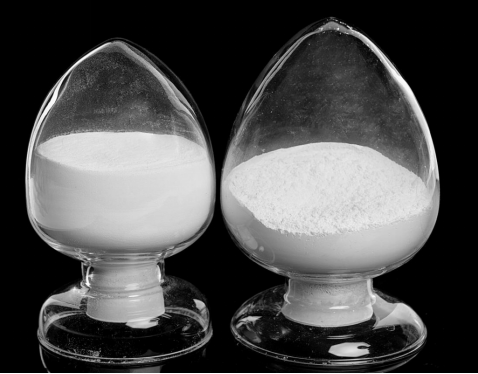
The technical requirements for alumina powder used in thermally conductive silicone primarily include the following aspects:
Chemical Composition:
Alumina Purity: The alumina content is generally required to be no less than 99.0%. For high-end applications, a higher purity level may be required, reaching 99.5% or above.
Impurity Content: Impurities such as silicon dioxide, ferric oxide , and sodium oxide must be strictly controlled. For instance, content should not exceed 0.10%, content should be no greater than 0.03%, and content should remain below 0.05%. Among these, is a major harmful impurity, as it can adversely affect the electrical performance of the silicone.
Moisture Content: Moisture content is typically restricted to 0.10% or less to prevent adverse effects during the preparation and application of the silicone.
Physical Parameters:
Particle Size: The average particle size should be controlled within an appropriate range, typically between 0.1 and 100 μm, depending on the specific application requirements. For example, the average particle size of alumina powder used in certain thermally conductive silicones ranges from 5 to 10 μm. In other cases, nanoscale alumina powder with a particle size usually around 100 nm is utilized.
Crystal Structure:
α-phase alumina features a hexagonal crystal structure, which is the densest among the various alumina phases, offering excellent electrical insulation and high thermal conductivity. Consequently, alumina powder for thermally conductive silicone generally requires an αphase content of no less than 95.0%.
Morphology: The crystal morphologies of alumina typically include vermicular (worm-like), flake, and spherical shapes. Currently, spherical alumina is the primary choice for filling high-thermal-conductivity insulating materials. Due to its lower surface energy, spherical particles disperse evenly within the matrix, allow for high loading levels, reduce system viscosity, and enhance the flexibility of the silicone.
Oil Absorption Value: The oil absorption value affects the mixing compatibility between the alumina powder and the silicone matrix. The value varies across different product grades but is generally required to be within 12 to 26 g/100g.
Surface Properties:
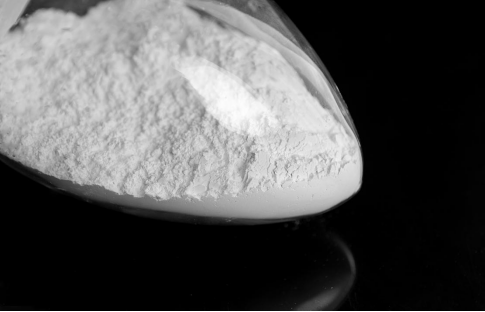
Surface Modification: Unmodified alumina exhibits strong surface polarity, making it difficult to disperse uniformly within polymer matrices. High loading levels can also lead to increased viscosity and degraded mechanical properties in silicone rubber. Therefore, surface modification of alumina powder is typically required. Silane coupling agents are the most commonly used modification agents. This treatment reduces the surface polarity of alumina and enhances its compatibility and dispersibility within the silicone matrix, thereby improving both the thermal conductivity and mechanical performance of the silicone product.
Impact of Particle Size on Performance
Particle size is one of the core factors influencing the thermal, mechanical, and processing properties of thermally conductive silicone. Varying particle size ranges exert distinct impacts—from microscopic packing structures to macroscopic end-use performance—as detailed below:
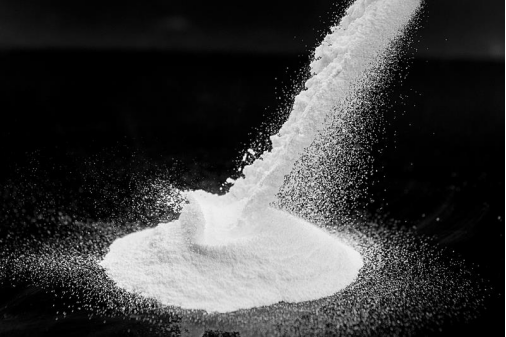
Impact on Thermal Performance
This is the most critical factor, where the core logic lies in how particle size determines the efficiency of forming thermal conduction pathways.
Large Particle Size Alumina Powder (10–100 μm): Large particles have fewer contact points between them and longer individual conduction paths. After filling, the continuity of the thermal network is relatively poor, resulting in limited improvement in thermal conductivity. However, large particles occupy major voids within the silicone matrix, establishing a baseline structure for subsequent filling with smaller particles.
Medium Particle Size Alumina Powder (1–10 μm): As the mainstream choice for thermally conductive silicone, medium-sized particles offer a balanced size that forms relatively continuous thermal chains within the matrix while filling the gaps between larger particles. When used in combination with other sizes, they significantly increase the density of thermal pathways, yielding optimal thermal conductivity.
Small / Nanoscale Alumina Powder (0.1–1 μm): Nanoscale particles feature a high specific surface area and high surface energy, making them prone to agglomeration. Poor dispersion can lead to thermal "islands" that diminish thermal efficiency. However, when properly dispersed, these ultra-fine particles fill the microscopic voids between medium and large particles, building a denser thermal network that significantly boosts overall thermal conductivity.
Impact on Processing Performance
Processing performance is mainly reflected in the viscosity and fluidity of the silicone, directly affecting processes such as mixing, molding, and coating during production.
Large Particle Size: Large particles have a smaller specific surface area and less contact area with the silicone matrix, resulting in low system viscosity and excellent fluidity. This makes high filler loading easier to achieve, making them suitable for formulating thermally conductive silicone pads and thermal putties that require large-area application.
Small / Nanoscale Particles: Due to their high specific surface area and strong surface polarity, small/nanoscale particles interact strongly with the silicone matrix. This causes a sharp increase in system viscosity and poor fluidity, making processing more challenging. Surface modification (such as silane coupling agent treatment) is typically required to lower viscosity and improve processability.
Impact on Mechanical Properties
The mechanical properties of thermally conductive silicone—such as tensile strength, elongation at break, and hardness—are closely tied to the particle size of the alumina powder.
Large Particle Size: Large particles exhibit weaker interfacial bonding with the silicone matrix and tend to act as stress concentration points. This leads to a reduction in both tensile strength and elongation at break, alongside higher hardness and reduced flexibility.
Small / Nanoscale Particles: When uniformly dispersed, small particles help distribute stress evenly and form tighter interfacial bonding with the matrix. This significantly enhances the tensile strength and tear strength of the silicone while maintaining good flexibility. Conversely, agglomerated nanoparticles will exacerbate the degradation of mechanical properties.
Impact on Electrical Insulation and Appearance
Electrical Insulation: $\alpha$-phase alumina inherently possesses excellent insulating properties, so particle size has little direct effect on electrical insulation. However, if nanoparticles agglomerate, the resulting micro-voids between particles can slightly lower the volume resistivity. On the other hand, uniformly filled large particles provide more stable insulation performance.
Appearance: Thermally conductive silicone formulated with smaller particles features a finer, smoother surface finish, making it ideal for high-precision electronic component packaging. Conversely, large particles lead to a rougher surface texture and lower gloss.
In practical manufacturing, a single particle size of alumina powder is rarely used alone. Instead, a multimodal size distribution ("Large + Medium + Small") is typically adopted. This approach maximizes thermal conductivity while balancing system viscosity and mechanical properties to meet the demands of various application scenarios.
To discover how our specialized alumina powders can elevate your thermal interface materials, visit us today at www.greatsunaopeng.com.
