 EN
EN

Against the background of continuous upgrades in 5G communications, RF front-ends, and power modules, mobile phone substrates have placed higher requirements on the dielectric properties, thermal conductivity, and sintering density of ceramic materials. As the foundational raw material for LTCC (Low-Temperature Co-Fired Ceramics) and HTCC (High-Temperature Co-Fired Ceramics) substrates, the quality of high-temperature calcined α-alumina micropowder directly determines the electrical reliability and mass production yield of the substrate. Building on years of expertise in high-temperature calcination processes, Greatsun Aopeng Group provides stable and controllable $\alpha$-alumina powder solutions for the mobile phone substrate industry.
I. Technical Parameter Perspective: Why Substrate-Grade Alumina Must Be "High Purity and Low Sodium"
The core indicators of alumina for mobile phone substrates focus on three dimensions: purity, crystal form, and impurity control. The typical parameters of Greatsun Aopeng Group alumina are as follows:
| Parameter | Specification | Impact on Substrate Performance |
| Purity | ≥99.9% | Insufficient purity leads to increased dielectric loss and reduced insulation performance. |
| α‑Phase Conversion Rate | ≥96.8% | A low α‑phase ratio leads to unstable sintering shrinkage and substrate warpage. |
| Content | ≤0.04% | Migration of sodium ions at high temperatures causes electrode corrosion and signal drift. |
| D50 Particle Size | 0.6∼3μm (Customizable) | Particle size distribution affects the viscosity of tape casting slurry and green density. |
| Content | ≤0.02% | Iron impurities reduce substrate whiteness and introduce dielectric loss. |
Low sodium is a critical threshold for substrate-grade alumina. Normal calcined alumina typically has a Na₂O content above 0.1\%, whereas Greatsun Aopeng Group stably controls Na₂O below 0.1\% through high-temperature calcination combined with a water-washing sodium-removal process, satisfying the stringent requirements for alumina used in mobile phone substrates.
II. Application Process Perspective: Tape Casting and Co-firing Match
The mainstream process for mobile phone ceramic substrates is tape casting. Alumina powder needs to be mixed with organic binders, solvents, and plasticizers to form a slurry, which is then processed through tape casting, lamination, and co-firing to yield multilayer substrates. The advantages of Greatsun Aopeng Group alumina on the processing end are demonstrated in:
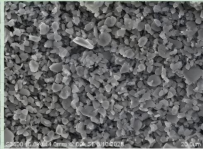
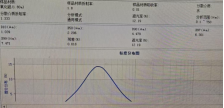
Good Slurry Stability: Concentrated particle size distribution (controllable SPAN: D90/D10 ratio) reduces slurry sedimentation and uneven casting thickness.
Stable Sintering Shrinkage: High α-phase conversion rate with minimal batch-to-batch variation ensures interlayer shrinkage matching during laminated co-firing, reducing the risk of substrate warpage and delamination.
Excellent Compatibility with Glass Powder: In LTCC formulations where alumina is combined with borosilicate glass powder, the surface characteristics of Greatsun Aopeng Group powder aid in uniform wetting by the glass phase, promoting low-temperature densification.
III. Customer Value Perspective: Comprehensive Benefits from Yield to Cost
Mobile phone substrate manufacturers are most concerned with mass production yields and material costs. Greatsun Aopeng Group alumina creates value through the following aspects:
Batch Stability: With self-built tunnel kiln calcination production lines, key indicator batch CV values are controlled within 5%, reducing the frequency of customer formulation adjustments.
Particle Size Customization: Different specifications with D50 ranging from 0.6μm to 3μm can be customized based on customer tape casting lines and sintering curves, providing a one-stop solution to meet requirements for coarse-grain filling and fine-grain sintering.
Supply Chain Security: Direct supply from the Shandong factory ensures short delivery cycles and avoids the long lead times and exchange rate fluctuation risks associated with imported alumina.
