 EN
EN

Selection of Alumina Raw Materials for High-Temperature Ceramic Parts
At present, new alumina materials are more and more widely applied in high-end electronics, precision structural components, new energy, optics, biomedicine and other fields. Some core components are widely adopted for their high temperature resistance, electrical insulation, corrosion resistance, high strength and high hardness. The usability and durability of these engineering ceramics, also called high-temperature structural ceramics, 80% depends on whether the alumina raw materials are selected correctly. If raw materials are chosen improperly, all subsequent sintering, machining and performance work will be wasted.
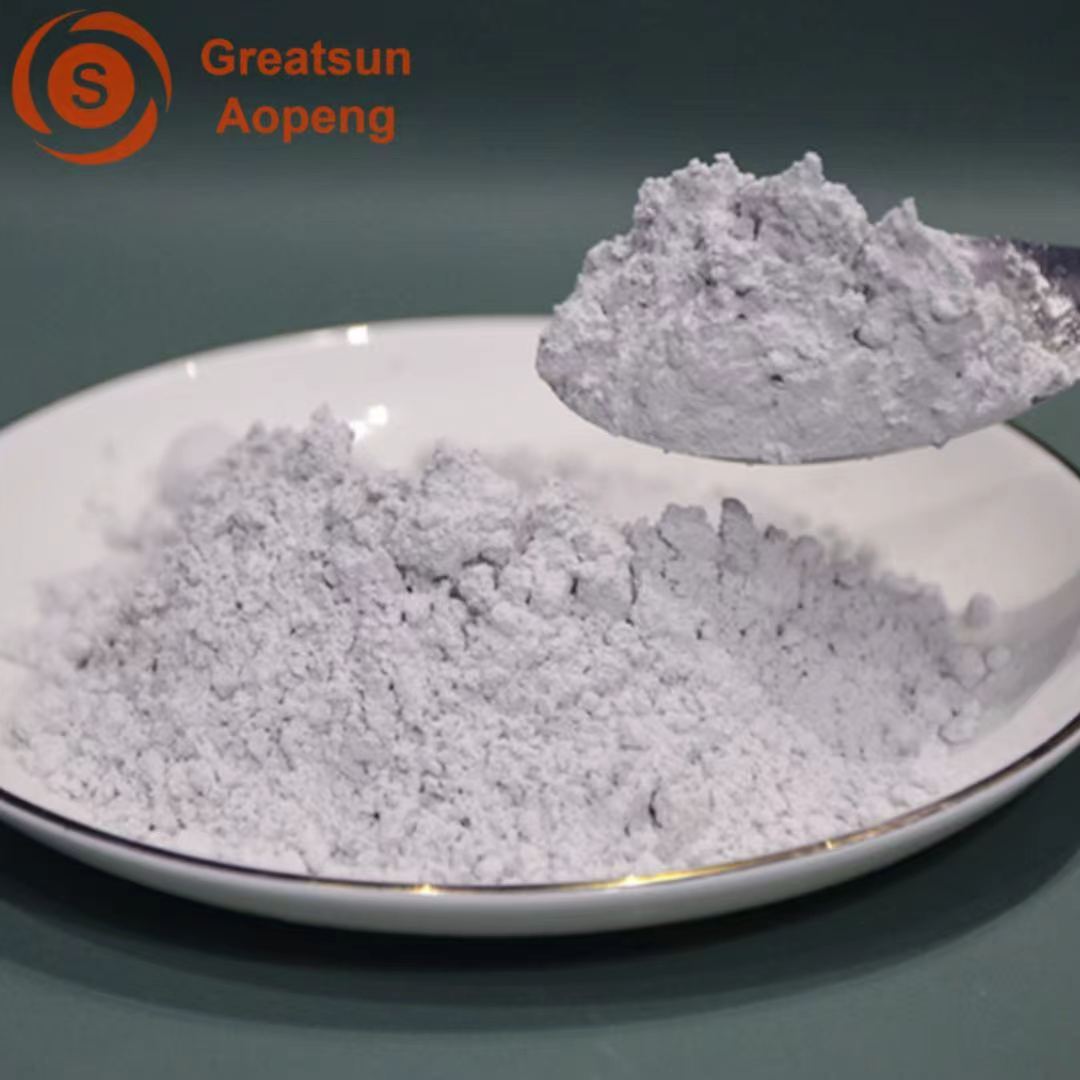
As an enterprise with years of deep cultivation in the new alumina material industry, Shandong Greatsun Aopeng calcined α-alumina has accumulated years of customer raw material usage data analysis experience, here is a brief discussion based on practical experience……
Three core indicators to grasp for high-temperature ceramic parts
1. Purity (the most critical)
2. Crystal form / phase structure
3. Particle size and granulation state (determines forming & sintering effect)
Purity: Directly determines the maximum temperature resistance
92% and 95% alumina contain a large amount of glass phase, easy to soften and deform at high temperature with limited strength, only suitable for low-temperature, ordinary working condition wear-resistant parts, and cannot be used for high-temperature structural parts.
99%, 99.5%, 99.7% high-purity alumina has extremely few glass phases, low high-temperature creep and high refractoriness, which are standard raw materials for high-temperature ceramic parts.
Therefore, directly select high-purity alumina with 99% and above for high-temperature parts.
Crystal form: α-Al₂O₃ is the high-temperature stable matrix
γ-Al₂O₃: High activity, but phase transformation, large shrinkage and deformation will occur at high temperature
α-Al₂O₃: Stable at high temperature, dense structure, good corrosion and erosion resistance
Mandatory raw material for high-temperature ceramic parts: α-phase alumina micropowder / granulated powder
Particle size & granulation: Determine whether dense high-temperature parts can be sintered
Fine powder: High sintered density and good high-temperature performance, but poor fluidity
Granulated powder: Good forming performance and uniform density, suitable for dry pressing / isostatic pressing
High-temperature structural parts prefer granulated alumina powder with 99% and above purity.
Therefore, careful screening is required when selecting raw materials from the source. The truly high-quality high-temperature alumina powder has the following characteristics: good sphericity, good fluidity, stable sintering shrinkage, high post-sinter density and few closed pores. Only powder with such features can make high-temperature ceramic parts with improved high-temperature strength and thermal shock resistance. One core rule: high-purity α-Al₂O₃ starting from 99%, the lower the impurities, the more stable the high-temperature performance.
We recommend our AL-10B alumina powder. At present, this product is stably used by domestic enterprises producing ceramic substrates, packaging wafers, ceramic chucks, insulating rings, ceramic bearings, bulletproof plates, armor protection parts, etc. Our CX99 and CX995 granulated powders have a bulk density of more than 3.88 g/cm³ ~ 3.9 g/cm³ after firing.
Physical and chemical indicators table:
| Test Item | Unit | Test Equipment | Measured Value | Test Basis & Description |
| Al₂O₃ | % | X-ray Fluorescence Spectrometer | 99.783 | GB/T 15154-94 |
| Na₂O | % | X-ray Fluorescence Spectrometer | 0.0333 | GB/T 15154-94 |
| SiO₂ | % | X-ray Fluorescence Spectrometer | 0.0137 | GB/T 15154-94 |
| Fe₂O₃ | % | X-ray Fluorescence Spectrometer | 0.0121 | GB/T 15154-94 |
| Primary Crystal Particle Size Test (OMEC POP-9) | ||||
| D10 | μm | / | 0.845 | GB/T 15154-94 |
| D50 | μm | / | 1.498 | GB/T 15154-94 |
| D90 | μm | / | 2.373 | GB/T 15154-94 |
Physical and Chemical Indexes of CX99 Granulated Powder:
| No. | Test Item | Sub-item | Average Value |
| 1 | Chemical Composition (%) | Al₂O₃ % | >99 |
| SiO₂ % | 0.33 | ||
| Fe₂O₃ % | 0.015 | ||
| Na₂O % | 0.05 | ||
| 2 | Bulk Density | g/cm³ | 1.04 |
| 3 | Moisture Content | % | 0.6 |
| 4 | Green Body Density | g/cm³ | 2.35 |
| 5 | Loss on Ignition | % | ≤4.0 |
| 6 | Particle Size D50 | μm | 0.76 |
| 7 | Sintering Temperature | ℃ | 1630 |
| 8 | Holding Time | h | 2.5 |
| 9 | Sintered Ceramic Density | g/cm³ | 3.88 |
| 10 | Average Shrinkage Ratio | – | 1.196 |
| 11 | Particle Size Distribution | Mesh | 60–250 |
| 12 | Ceramic Color | – | Pale Yellow |
| Inspector Seal | — | 2 | Test Result: Qualified |
Physical and Chemical Indexes of CX995 Granulated Powder
| Physical Properties | Unit | Measured Value |
| Granulated Powder D50 | μm | 90 |
| Bulk Density | g/cm³ | 1.15 |
| Loss on Ignition | % | 3.5 |
| Moisture Content | % | 0.35 |
| Chemical Properties | Unit | Measured Value |
| Al₂O₃ | % | 99.5 |
| Na₂O | % | 0.05 |
| CaO | % | 0.03 |
| MgO | % | ≤0.1 |
| Fe₂O₃ | % | 0.03 |
| Ceramic Properties | Unit | Measured Value |
| Primary Crystal Size | μm | 0.85 |
| Median Particle Size D50 | μm | 1 |
| Green Density (100MPa) | g/cm³ | 2.3 |
| Sintered Density (1650℃ / 2h) | g/cm³ | 3.92 |
| Shrinkage Rate | % | 17 |
For detailed data, please contact us for consultation.
When selecting raw material manufacturers, production volume or temporarily high indexes do not represent high-quality powder; consistent material performance and stable quality are the core criteria. Purchasing materials merely based on low prices will lead to production losses sooner or later.
Selecting high-quality stable raw materials brings multiple benefits: no frequent kiln parameter adjustment, stable sintering yield with fewer defective products; no repeated mold modification, saving electricity, labor, equipment wear and rework costs. A mere 1% increase in finished product yield directly translates to tangible profit growth.
